


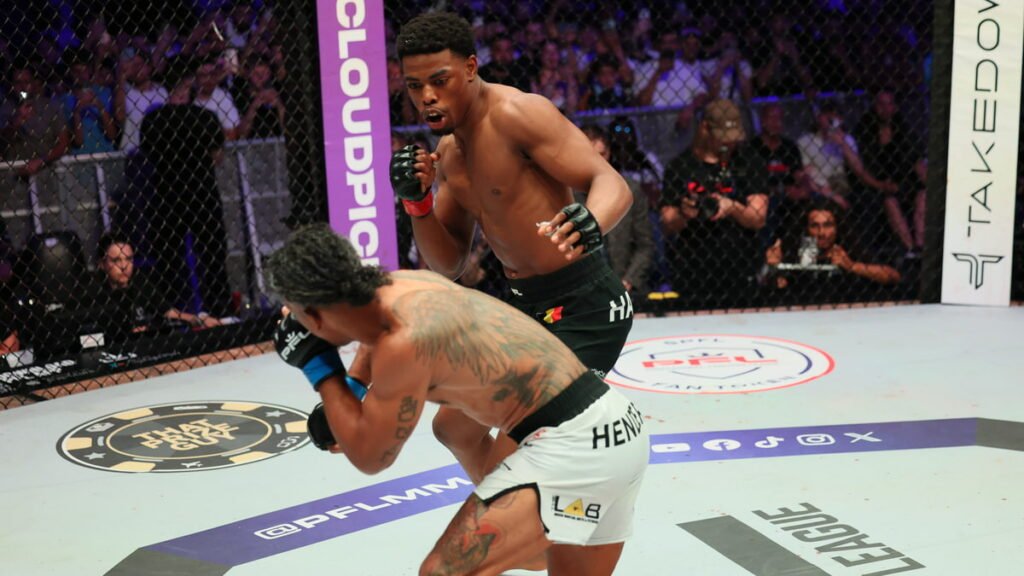
Inside Brussels’ ING Arena, the PFL main event ended almost as soon as it began. Patrick Habirora needed just 20 seconds to defeat a name deeply rooted in MMA history: former UFC champion Benson Henderson.
On paper, the matchup was framed as a classic generational clash—endurance and experience versus the raw momentum of a rising European prospect. But once the fight started, those theoretical balances disappeared almost immediately.
From the opening exchanges of round one, both fighters engaged cautiously in a standing battle. The tempo remained controlled, almost standard, until Habirora found his opening. What followed was brief and decisive: a sharp left-right combination that dropped Henderson instantly. The fight was over before it could even develop.
This quick knockout is far more than a simple sporting result. It stands as a generational statement. Habirora now moves to 9-0 as a professional, with 8 finishes by KO or TKO, reinforcing his image as a pure finisher capable of ending fights in seconds rather than rounds.
On the other side, the loss inevitably raises questions about Benson Henderson’s current standing. A respected veteran of the sport, his legacy remains intact, but the modern MMA landscape—faster, sharper, more explosive—offers less margin for experience alone.
Immediately after the win, Habirora refused to slow his momentum, calling out bigger names such as Mike Perry, signaling a clear shift toward higher-profile, commercially significant matchups.
What happened in Brussels was therefore not just a main event finish—it was a quiet but undeniable shift in the welterweight hierarchy, where new forces are beginning to take center stage.