



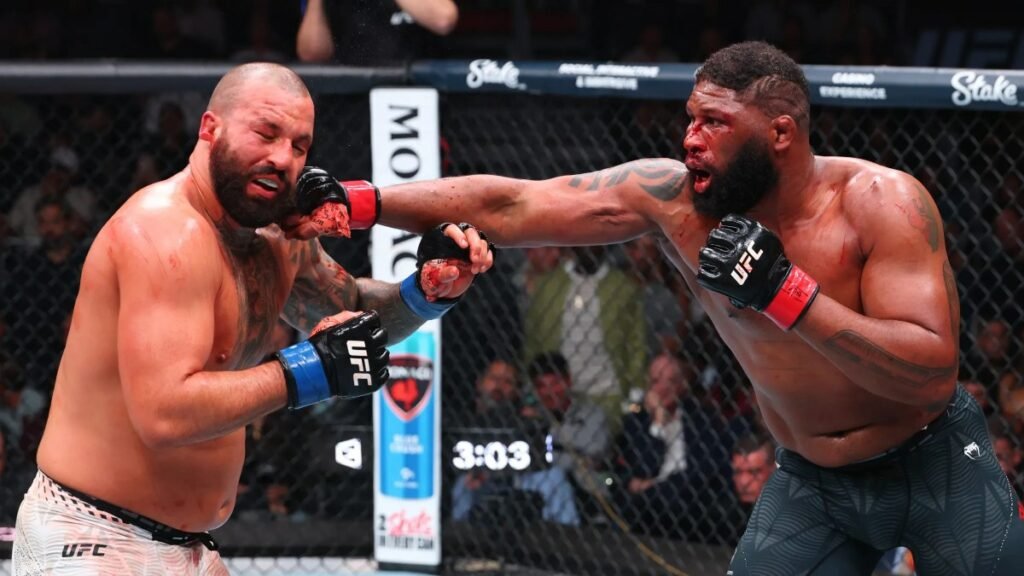
On the surface, it appears to be just another controversial judging decision at UFC 327. But at a deeper level, the clash between Curtis Blaydes and Josh Hokit exposes a recurring structural issue in combat sports: the gap between the fighter’s lived experience inside the cage and the judges’ interpretation on the scorecards.
From the outset, this was never purely technical. It was the culmination of a psychological battle fueled by days of trash talk and provocation. That tension spilled into the cage, producing a chaotic, open fight—closer to a street brawl than a controlled tactical contest. Three rounds of relentless pressure, heavy exchanges, and clinch sequences that are notoriously difficult to score with precision.
This is where the core issue emerges.
The judging dilemma: control vs impact
MMA scoring is built on clear criteria: significant strikes, control, submission attempts, and overall activity. Yet in fights like this—where close-range exchanges blur visibility—interpretation becomes highly subjective.
Curtis Blaydes believes he:
- won the first round with strong finishing moments and ground control
- lost the second
- secured the third through higher output and clinch dominance
The judges, however, saw a different fight, awarding the victory to Josh Hokit—likely favoring the clearer, more visually impactful strikes.
This raises a fundamental question:
are judges scoring actual effectiveness… or perceived impact?
Veteran vs rising force
The fight also carried a deeper sociological layer within the sport:
- Curtis Blaydes represents experience and structured strategy
- Josh Hokit embodies a new generation driven by spectacle and narrative appeal
In such matchups, outcomes can transcend pure performance, subtly reflecting the promotion’s direction:
rewarding quiet efficiency… or amplifying high-intensity entertainment.
The aftermath: more than a loss
The decision in favor of Josh Hokit reshapes the heavyweight landscape:
- fast-tracking him toward a major bout with Derrick Lewis
- reinforcing his status as a breakout attraction
- while forcing Curtis Blaydes into reflection: is the issue technical… or about how performance is “read” and valued?
Beyond the fight: flaw or feature?
This situation is not an anomaly—it reflects deeper tensions within MMA:
- inconsistent interpretation of judging criteria
- visual bias influencing scoring
- the growing fusion between sport and entertainment
Ultimately, one question lingers:
Did Blaydes truly lose… or did he lose because his way of winning no longer aligns with a spectacle-driven sport?