


On the surface, it appears to be just another fight within the spectacle-driven machinery of the UFC. Yet, beneath that surface, the clash between Curtis Blaydes and Josh Hokit transcends the binary logic of win and loss. It becomes a brutal test of the human body’s limits and a raw embodiment of the risk economy governing modern combat sports.
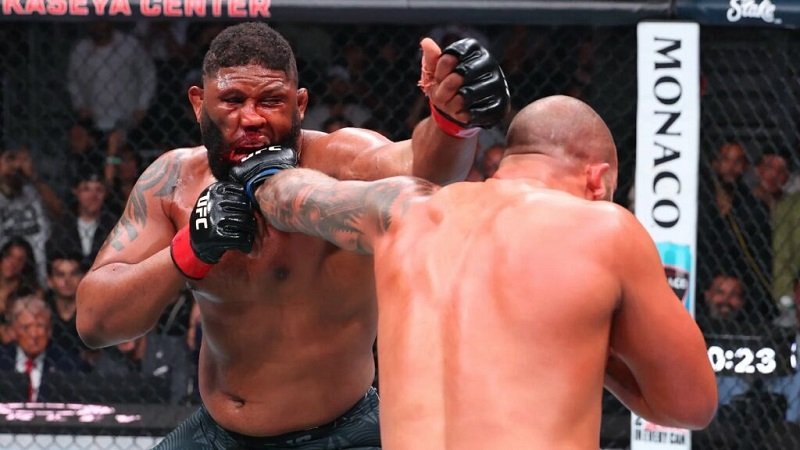
From the opening moments, the fight shifted into what can only be described as “open warfare,” where tactical calculation gave way to sheer physical confrontation. The exchanges were no longer strategic tools but instruments of attrition, each strike contributing to the gradual erosion of both physical endurance and mental resilience.
Although Josh Hokit emerged victorious by decision, his triumph cannot be confined to the judges’ scorecards. His post-fight message, laced with humor and confidence (“made of steel”), subtly reveals a deeper truth: in this arena, pain becomes a language, and injury a defining element of a fighter’s identity. The $200,000 in bonuses represents the economic translation of a system that rewards violence when it reaches its peak intensity.
On the other side, however, the reality is far more severe. Curtis Blaydes did not simply lose a fight—he absorbed its full physical cost. A fractured orbital bone, a broken nose… injuries that highlight the harsh toll of a sport where repeated trauma is not incidental, but structural. Already hindered by past injuries, his career trajectory may once again be delayed—or even fundamentally altered.
Set within the framework of UFC 327, this bout revives a central question: how far can this model go before it turns into systemic exploitation of fighters’ bodies? When brutality becomes a benchmark for excellence, and bonuses are tied to the intensity of “wars,” the sport reveals an underlying economy built on the commodification of pain.
Moreover, the inclusion of Josh Hokit in a White House event, reportedly at the request of Donald Trump, opens yet another analytical dimension—the intersection of sport and political symbolism. The fight is no longer just a sporting contest; it becomes a stage for power projection, where media narratives and political interests converge.
Ultimately, this was not merely a successful violent spectacle. It was a mirror reflecting the nature of the UFC itself: immediate victories, lasting bodily damage, and an audience captivated by intensity—while the true cost remains quietly inscribed within the fighters’ bodies.
The real question, then, is not what we saw… but what we chose not to see.