


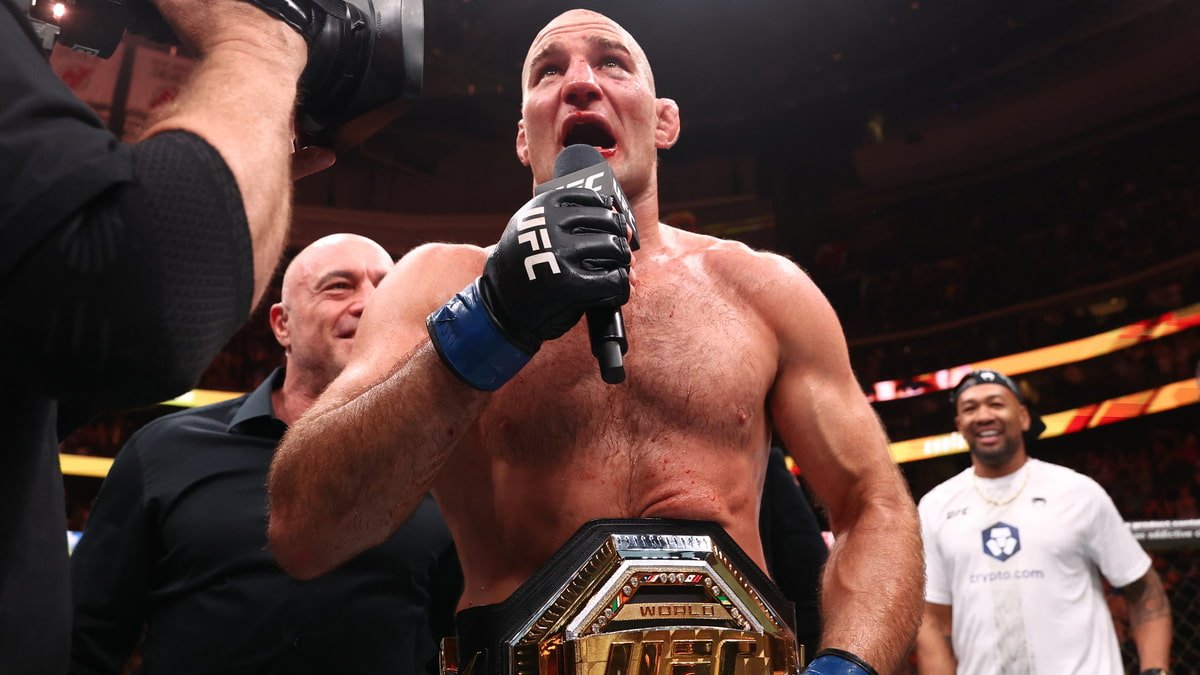
The victory of Sean Strickland over Khamzat Chimaev at UFC 328 was not just another title change in the middleweight division. Behind the split decision that brought the belt back to the American fighter lies a broader confrontation, where the cage reflects a world shaped by tension, marketing, and identity-driven narratives.
On the surface, the fight delivered everything expected: intensity, durability, and a tightly contested tactical battle. But beneath the spectacle, the modern machinery of MMA becomes visible. Khamzat Chimaev, long seen as an almost unstoppable force, encountered for the first time the human limits of his rise. A sporting defeat, but also a symbolic rupture.
Inside the Octagon, Sean Strickland did not only reclaim a championship belt. He also reclaimed a narrative. A controversial figure, often criticized for his inflammatory public statements, suddenly shifted toward public reflection. His apologies to multiple communities after weeks of polarizing rhetoric are not merely moral gestures; they expose a deeper truth about a sport where provocation has become currency.
The Fall of Invincibility: When Chimaev’s Myth Collapses Against Strickland’s Resistance
When he admits going “too far” and says he is trying to “sell fights,” he reveals an industry where entertainment often outweighs pure sport. The fighter is no longer just an athlete; he becomes a narrative product, shaped as much by controversy as by performance.
And yet, beyond the media noise, a raw sporting reality remains. An opponent like Khamzat Chimaev moving forward without retreat, absorbing strikes without breaking. Strickland himself acknowledges it: an almost unnatural resilience that reminds us MMA is still, at its core, a collision of extreme human wills.
But this night at UFC 328 goes beyond sport. It questions the transformation of mixed martial arts into a global stage where identity, cultural tension, and media storytelling intertwine. Each fight becomes a reading of the world itself, far beyond the official result.