


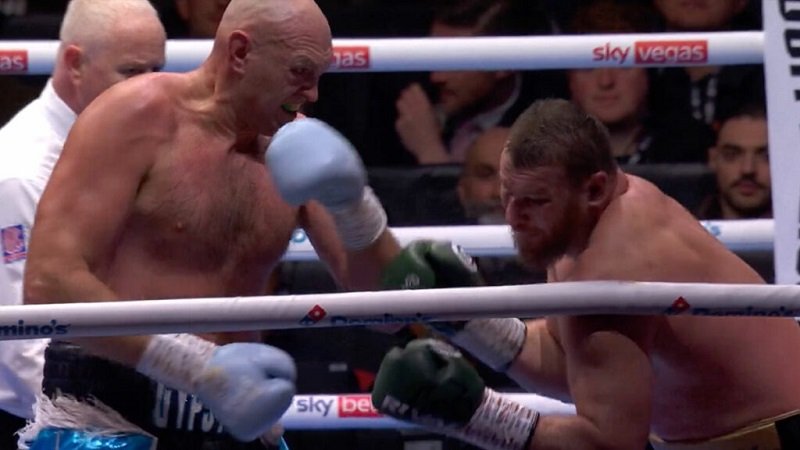
On a night that, on the surface, looked like a straightforward return to winning ways, but in reality carried deeper signals within the global boxing landscape, Tyson Fury reasserted himself by defeating Arslanbek Makhmudov via unanimous decision inside the Tottenham Hotspur Stadium in London. Yet, reducing this fight to its outcome would be a shallow reading; it demands a deeper analytical lens across tactical, psychological, and commercial dimensions.
From the opening rounds, Fury did not enter as a showman chasing a knockout, but as a strategist in reconstruction mode, aiming to rebuild his image after two defeats to Oleksandr Usyk. He chose control over risk: a disciplined jab, rhythm disruption, intelligent clinching, and a calculated effort to drain his opponent. His dominance was not merely technical — it reflected a matured tactical awareness at a critical stage of his career.
Across the ring, Makhmudov represented raw but incomplete power: forward pressure, physical commitment, yet lacking the tools to convert aggression into effective advantage. As the rounds progressed, his pressure became a liability, his energy fading against a fighter who knows how to win without overexposure.
Vintage Tyson Fury against Arslanbek Makhmudov 🔥#FuryMakhmudov is LIVE on Netflix pic.twitter.com/oByD1b6BPB
— Netflix Sports (@netflixsports) April 11, 2026
Perhaps the most telling element was Fury’s apparent lack of intent to pursue a knockout. This was no coincidence; it signaled a strategic shift — from entertainment to efficiency. The objective was clear: a clean win, restored confidence, and a message to the division — the “King” has not left, he is recalibrating.
However, the most significant statement came after the fight. By openly calling out Anthony Joshua, Fury was not merely generating headlines; he was positioning himself within a larger strategic framework. A fully British showdown between these two icons transcends sport — it is a massive commercial and media enterprise.
In this light, the victory becomes a repositioning move:
– Sportingly: a reset after the Usyk setbacks.
– Psychologically: rebuilding confidence without unnecessary risk.
– Commercially: setting the stage for a mega-fight.
So, who should be next? The answer goes beyond sporting merit. A rematch with Usyk serves legacy; a clash with Joshua serves magnitude.
In modern boxing, the two rarely align.