


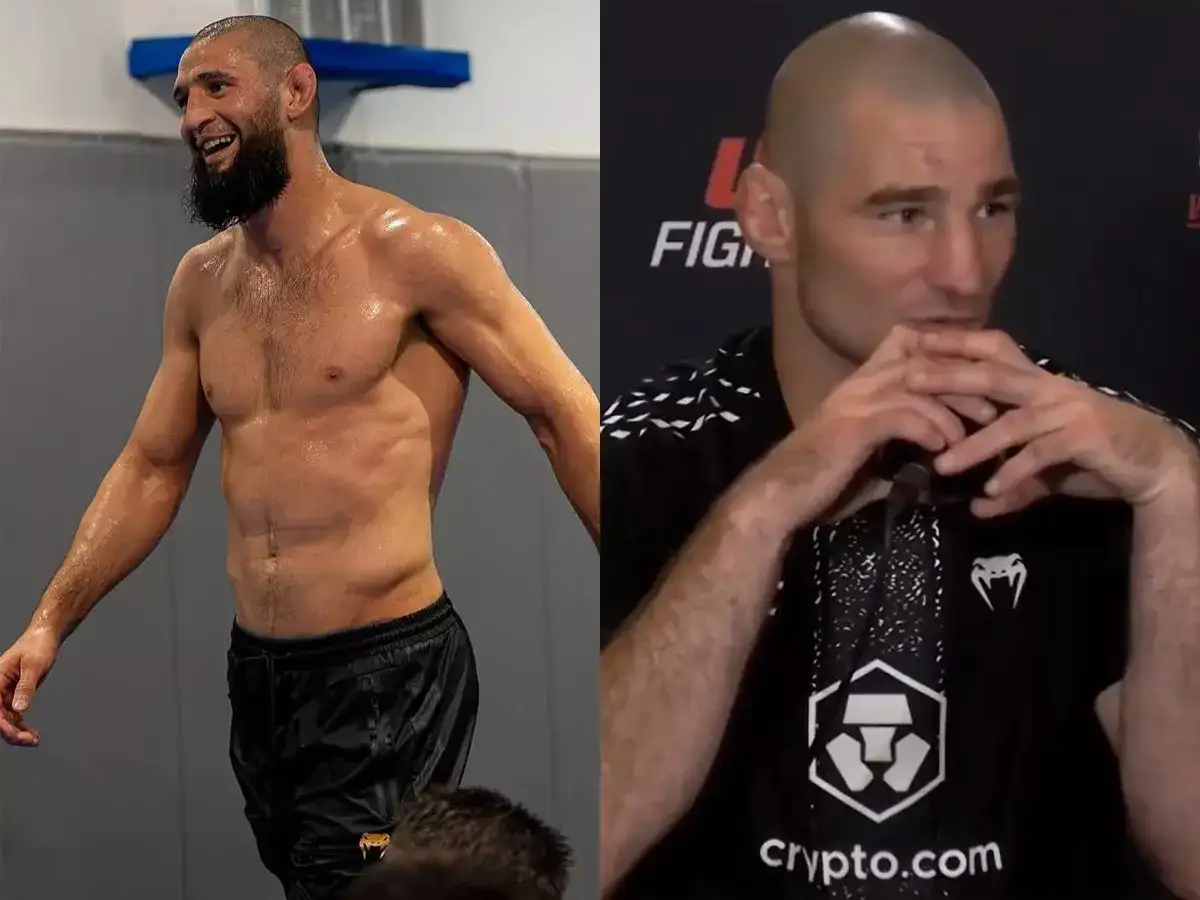
In a carefully staged interplay between athletic preparation and narrative control, Khamzat Chimaev continues to shape his aura ahead of the high-stakes clash at UFC 328, where he is set to face Sean Strickland in a bout that transcends the limits of a standard title defense. At stake is not only the belt, but the consolidation of symbolic dominance within a division reshaped by shifting power dynamics—once defined by figures like Dricus Du Plessis, and now contested under new hierarchies.
Within this framework, Chimaev’s public struggle to find a suitable sparring partner reveals more than a logistical inconvenience; it exposes a structural dilemma inherent to elite competition. When a fighter outgrows the level of available opposition, training ceases to be a straightforward process of refinement and becomes instead a complex challenge—one where the scarcity of credible resistance undermines the simulation of real combat conditions.
Chimaev’s response, true to his persona, comes as a calculated provocation: a $200,000 reward offered to any Olympic wrestler capable of “surviving” against him. Beneath the surface spectacle lies a layered message—an assertion of supreme confidence, a deliberate media maneuver, and a tacit acknowledgment of Olympic wrestling as the ultimate benchmark of physical and technical excellence.
Yet this display invites a deeper question: does it signal overwhelming dominance, or competitive isolation? A champion compelled to manufacture challenge may stand at the peak of superiority—or at the edge of a narrowing ecosystem. Between these interpretations, Chimaev operates on a fine line, where every move doubles as both preparation and performance.
Across from him, Sean Strickland embodies a stylistic counterpoint defined by relentless pressure, tactical discipline, and the ability to impose a suffocating pace. While Chimaev showcased his wrestling control against Dricus Du Plessis, the true test lies in adapting that dominance against an opponent who thrives on structure and positional control.
Ultimately, Chimaev’s initiative extends beyond training—it reframes the very nature of preparation in modern MMA, where media exposure becomes an extension of combat itself. In the world of Ultimate Fighting Championship, the fight often begins long before the cage door closes—and sometimes, it is already won in the realm of perception.