


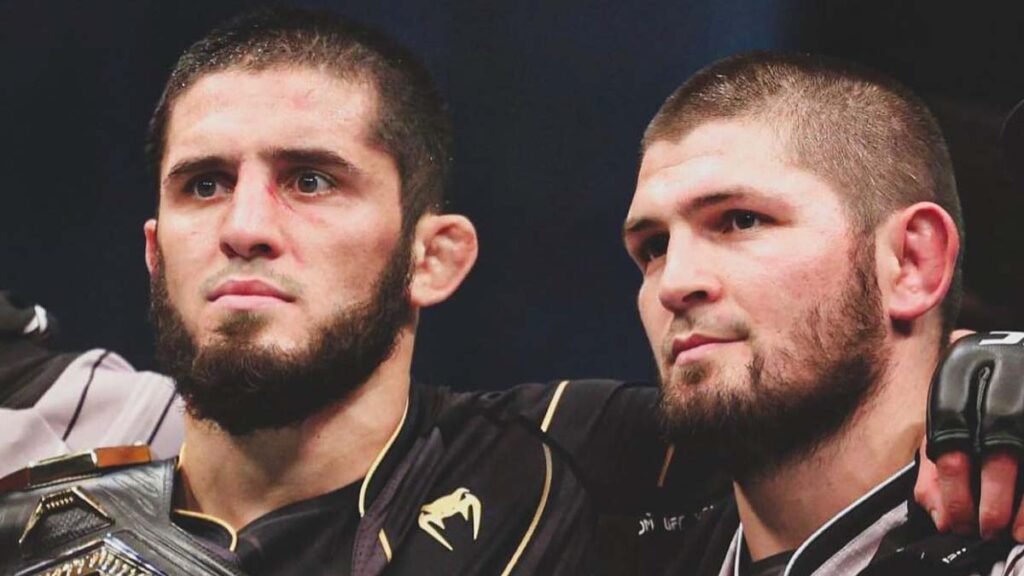
On the day of UFC 330, as the spotlight remained fixed on the highly anticipated clash between Islam Makhachev and Ian Machado Garry, the most revealing moment did not come from the rivalry between the two fighters. It emerged from inside the Dagestani camp itself. Khabib Nurmagomedov was not discussing tactics, wrestling, or championship strategy. Instead, he publicly corrected his closest protégé over a single phrase—“Shut up”—directed at Ian Machado Garry during the pre-fight press conference. It seemed like a passing remark, yet it exposed something far more significant: the standards of leadership and the values Khabib believes should define his team’s identity on the global stage.
@tntfightsports Khabib to Islam: “Be nice brother. Don’t say shut up” 😅 #UFC330 | Saturday | Stream TNT Sports on HBO Max (via X/WillHarrisAOAF)
The incident unfolded against an unexpected backdrop. Ian Machado Garry, a fighter often associated with confidence and verbal gamesmanship, chose an unusually respectful tone. He openly described Makhachev as the best fighter in the world, a gesture that stood in sharp contrast to the confrontational atmosphere typically seen at UFC press conferences. Makhachev’s response—telling him to “shut up”—immediately drew attention. The lightweight champion later explained that the noise inside the venue had prevented him from hearing what Garry was actually saying and that he never intended to disrespect his opponent. That explanation may have addressed his intentions, but it did not satisfy Khabib, whose concern was less about motive than about how the moment would be perceived.
In a video released by Anatomy of a Fighter, Khabib delivered his criticism with a mix of humor and authority. Joking that he had paid for a year of English lessons for his fighters “and they still learned nothing,” he quickly shifted to a much more serious point. When an opponent shows respect, he argued, that respect should be returned. If there is nothing respectful to say in return, remaining silent is preferable to uttering words that may be interpreted as contempt. The message extended well beyond Islam Makhachev. It was a public reminder of the behavioral standards that Khabib expects everyone representing his camp to uphold.
The exchange also offers a revealing glimpse into Khabib’s role since retirement. He is no longer merely a former champion or a technical mentor. He has become the guardian of a sporting culture built on discipline, humility, and respect for one’s opponent. From his perspective, competitive dominance loses part of its meaning if it is accompanied by conduct that can be perceived as arrogance. That philosophy explains why he chose to intervene immediately and publicly rather than allowing the incident to pass without comment.
The timing makes the episode even more significant. Modern UFC press conferences have evolved into promotional spectacles where verbal confrontations often generate as much attention as the fights themselves. Ian Machado Garry deliberately departed from that script by offering admiration instead of provocation. In doing so, he subtly shifted the psychological dynamic. Makhachev’s sharp reply—even if unintentional—created a narrative that contrasted with the image traditionally associated with the Dagestani team, an image built not only on relentless success but also on composure and restraint.
That image is precisely what Khabib was protecting. His intervention underscored a belief that champions are judged by far more than what they accomplish inside the Octagon. Every public appearance, every reaction, and every sentence contributes to the legacy they build. In an era where a brief video clip can circulate across the world within minutes, a single phrase can shape public perception almost as powerfully as a championship victory. Experience has taught Khabib that reputations are accumulated over years but can be challenged in a matter of seconds.
Islam Makhachev continues to insist that he never intended to offend Ian Machado Garry, and there is little reason to doubt his explanation. Yet the episode illustrates a defining reality of modern combat sports: intentions alone no longer determine how an athlete is judged. Public memory is shaped by what people see and hear, not by what remains unspoken. By correcting his champion immediately, Khabib was not simply addressing an isolated remark. He was reinforcing a philosophy—that true greatness is measured not only by victories inside the cage, but also by the discipline, respect, and character displayed outside it.