


In mixed martial arts, some fights are measured by far more than championship belts or rankings. They become global events where athletic competition intersects with entertainment, business, and financial opportunity. And whenever Conor McGregor’s name appears on a fight poster, the equation changes entirely. The contest evolves beyond sport, becoming a commercial spectacle capable of reshaping careers both inside and outside the Octagon.
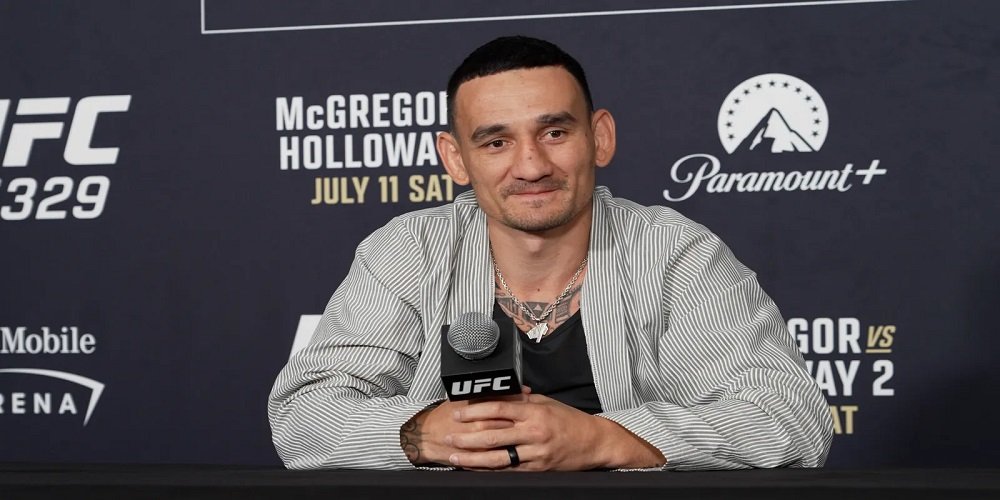
That is the landscape surrounding Max Holloway as he prepares to headline UFC 329 against McGregor. The former featherweight champion has openly suggested that the highly anticipated rematch could deliver the largest purse of his professional career, highlighting how modern MMA is increasingly defined by both competitive excellence and economic value.
More Than a Rematch: A Rare Financial Opportunity
Thirteen years after their first encounter, Holloway will once again stand across from McGregor under circumstances vastly different from those that surrounded their initial meeting.
Since then, the Hawaiian has established himself as one of the greatest featherweights in UFC history, building a legacy through consistency, durability, and elite performances. McGregor, meanwhile, remains the most commercially influential figure the sport has ever produced, with an unmatched ability to generate global attention regardless of how long he has been away from competition.
For Holloway, this fight is therefore about much more than settling unfinished business. It represents an economic milestone that could redefine the financial rewards of his career.
His comments also arrive during a period of significant change for the UFC’s broadcasting model. Following the organization’s move away from the traditional pay-per-view structure toward its distribution agreement with Paramount+, questions have continued to emerge regarding how the new system affects fighter compensation.
According to Holloway, the difference has been noticeable. He believes the new model has significantly improved his earnings and even suggested that fighters who have not experienced similar financial growth may need stronger representation and better contract management.
Is the UFC’s New Business Model Reshaping Fighter Pay?
Holloway’s remarks reopen one of the most important conversations in modern MMA economics.
For years, fighter compensation has remained one of the sport’s most debated subjects. While some athletes remain cautious about the long-term effects of evolving broadcast agreements, others argue that new media partnerships create greater earning potential—particularly for competitors capable of attracting massive audiences.
Few names embody that commercial power more than Conor McGregor.
His influence extends well beyond competitive achievements. Even after years away from active competition, his return remains one of the biggest business events in combat sports, with the ability to drive television audiences, sponsorship value, ticket sales, and overall event revenue.
That economic momentum inevitably benefits everyone sharing the spotlight with him.
“We Are Prize Fighters”: Holloway Embraces the Business Reality of MMA
Perhaps the most striking aspect of Holloway’s comments is his willingness to speak openly about money.
Rather than presenting championship glory as the only motivation, the former UFC champion acknowledged a reality often overlooked in public discussions: professional fighters put their bodies, health, and long-term well-being on the line every time they enter the cage. Financial compensation is therefore not separate from the profession—it is an essential part of it.
For Holloway, recognizing the importance of earnings does not diminish competitive ambition or the pursuit of legacy. Instead, it reflects the evolution of mixed martial arts into a multi-billion-dollar global industry where sporting excellence and commercial success increasingly go hand in hand.
A Night Where Legacy Meets Business
A victory over McGregor would offer Holloway far more than another signature win.
It would further strengthen his place among the UFC’s all-time greats while potentially delivering the most lucrative paycheck of his career.
Across the Octagon, Conor McGregor has repeatedly expressed confidence in his physical preparation and determination to prove that years away from competition have not diminished his ability to perform at the sport’s highest level.
As a result, UFC 329 stands as more than a blockbuster fight card. It also represents a significant test of the UFC’s evolving business model and another demonstration of McGregor’s unique ability to transform every appearance into a global commercial event.
Standing at the intersection of sporting ambition, historical legacy, and financial opportunity, Max Holloway enters one of the defining moments of his career. Victory would not simply elevate his status inside the Octagon—it could also reward him with the largest payday he has ever earned, reinforcing the reality that, in today’s MMA landscape, greatness is measured not only by championships but also by the extraordinary value generated when the sport’s biggest stars collide.