


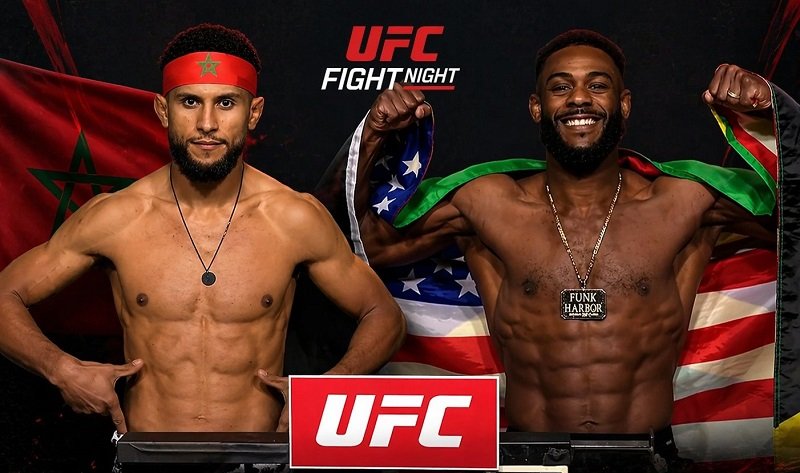
At first glance, it is just another fight. In reality, the clash between Youssef Zalal and former champion Aljamain Sterling, headlining UFC Fight Night: Sterling vs. Zalal, reaches far beyond the cage. It becomes a symbolic moment where national representation, legitimacy, and the aspirations of a Moroccan youth searching for alternative paths to success intersect.
From an analytical standpoint, this fight cannot be separated from the recent trajectory of Moroccan fighters within the UFC. A سلسلة of losses on preliminary cards has created a growing gap between expectation and competitive reality. In this context, Zalal is no longer just a fighter—he becomes a symbolic figure. A win could partially restore confidence; a loss could deepen an already fragile narrative.
Zalal’s own journey reflects this tension. After entering the UFC in 2020 with three straight wins, he was released in 2022 following a difficult stretch. Instead of fading, he rebuilt himself outside the promotion, returning sharper and more complete, particularly with a dangerous grappling arsenal. His record (18-5-1, including 10 submission wins) tells not just a story of technical growth, but of resilience and reinvention beyond the system.
Across from him stands Sterling, representing more than just an opponent. He embodies a fully developed fighting system built on control, pacing, and tactical intelligence. This fight, therefore, is not merely stylistic—it is structural. It pits a product of a mature ecosystem against a fighter forged through adversity and reconstruction.
Official betting odds slightly favor Zalal (54% to 44%), yet such numbers can be misleading. The deeper battle lies in his ability to manage the psychological weight of his first main event, where visibility can quickly turn from opportunity into ضغط.
Beyond the octagon, the implications are societal. In a country where sport often functions as a channel for symbolic mobility, the rise of a name within the UFC carries broader meaning. A victory could reshape the collective imagination around Moroccan MMA, encouraging investment and attention. A decisive loss, however, may reignite a structural debate: is the limitation rooted in individual fighters, or in the system surrounding them?
Ultimately, this fight is not only about the career of Youssef Zalal. It is a test of a broader model—the Moroccan fighter striving to succeed in a highly competitive global system without fully developed institutional backing. Between victory and defeat lies not only a ranking shift, but a symbolic repositioning of Morocco within the global MMA landscape.