


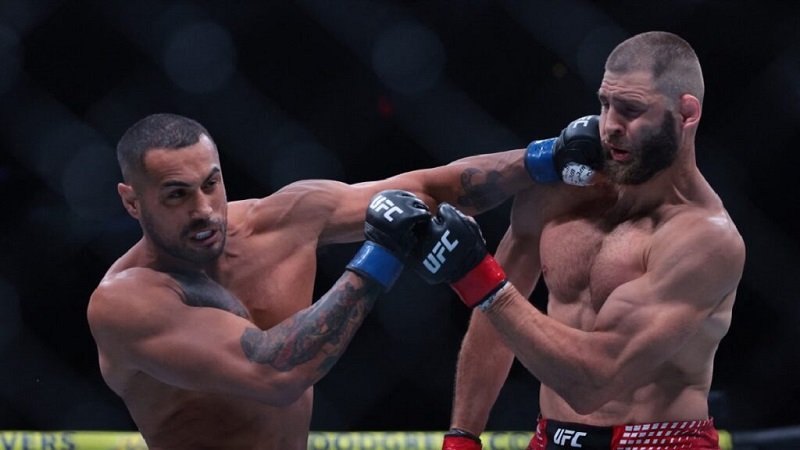
In a scene that reflects the brutality of combat sports as much as their psychological depth, the fight at UFC 327 became a live laboratory contrasting apparent control with true finishing ability. The devastating knockout loss of Jiri Prochazka was not merely technical—it exposed a deeper tactical and mental breakdown. A reality instantly captured by Paddy Pimblett: “He was doing too much.”
When excess becomes vulnerability
Prochazka appeared in control, especially after his opponent suffered a serious knee injury. Logically, the fight should have tilted in his favor. Yet, a classic high-level paradox emerged: when a fighter believes victory is secured, discipline often gives way to overconfidence.
Pimblett’s remark goes beyond criticism—it highlights a failure in managing the moment. Doing too much can open fatal gaps, even against an injured opponent.
Carlos Ulberg: winning from the edge
Ulberg represents the fighter who refuses the expected script. Competing with a torn ligament is not just physical hardship—it is a psychological battle. Yet instead of surviving, he flipped the narrative with a single decisive strike.
Here lies the key insight: efficiency over volume. One precise action, at the right moment, changed everything.
Between control and finishing: Prochazka’s lesson
The “creative chaos” style of Jiri Prochazka proves to be a double-edged sword. While it brings unpredictability, it also exposes him when tactical discipline fades.
This loss raises a crucial question:
- Will he return with greater structure?
- Or continue embracing a high-risk, high-reward style?
Lasting impact?
Heavy knockouts leave two marks:
- Physical: durability and recovery
- Mental: confidence and decision-making
Yet given Prochazka’s mindset, this defeat could become a turning point rather than a downfall.
Conclusion
What happened at UFC 327 reinforces a fundamental truth:
Fights are not won by control… but by clarity in the decisive moment.