


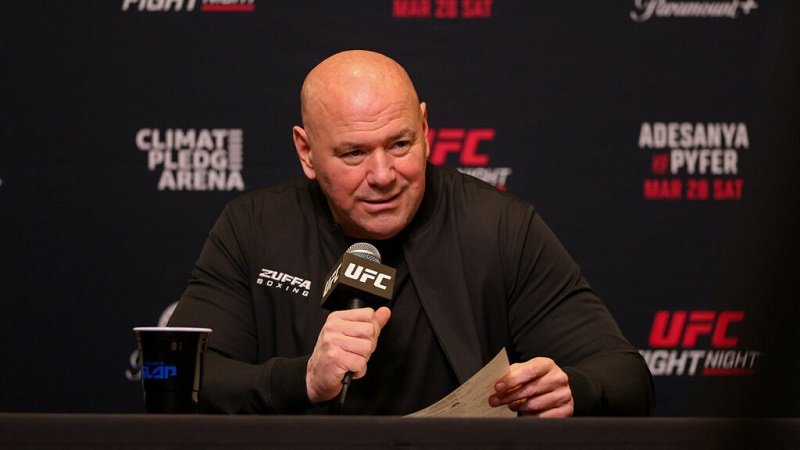
In a development that highlights the deep transformations within the MMA industry, Dana White’s latest statements go far beyond simple fight promotion. What is unfolding is not merely a fight card update, but a broader reconfiguration of the economic model surrounding the cage.
As anticipation builds for what is being described as a historic event at the White House, UFC 327 adds a heavyweight clash between Derrick Lewis and rising prospect Josh Hokit. The latter, coming off a brutal war with Curtis Blaydes, has emerged as a breakout figure after securing a double bonus totaling $200,000.
Yet beyond the addition of a fight, it is the financial announcement that truly shifts the landscape.
A decade of pushing boundaries.
We’re celebrating our 10th birthday alongside America’s 250th anniversary at UFC FREEDOM 250 💪🇺🇸
An historic night at the White House co-presented with @ufc
We’re also proud to announce a first of its kind, $1 million $CRO bonus pool for the… pic.twitter.com/gXLVr9EGSS
— Crypto.com (@cryptocom) April 12, 2026
One million dollars: more than just a number
In partnership with Crypto.com, the UFC has unveiled an unprecedented $1 million bonus in cryptocurrency for the “Fight of the Night.” This move goes beyond promotional spectacle, signaling a structural shift in how incentives are embedded within combat sports.
In practical terms, the two fighters awarded could each receive up to $500,000—an amount that dramatically redefines performance-based earnings.
Between spectacle and economics: a new equation
This shift reflects a deliberate strategy: turning violence, intensity, and spectacle into direct economic drivers. While traditional bonuses hovered around $100,000, with an additional $25,000 for finishes, the UFC now appears to be escalating financial stakes to actively shape fighter behavior.
This raises a critical question: will such incentives push fighters toward more aggressive, risk-heavy styles at the expense of tactical discipline and long-term safety?
The White House: amplified symbolism
Hosting the event at the White House adds a powerful symbolic layer. It intertwines national celebration, political imagery, and financial innovation, placing the UFC at the intersection of sport, power, and digital economy.
This positioning underscores the organization’s evolution into a global platform that blends entertainment with emerging financial ecosystems.
An open question
As financial incentives reach unprecedented levels, one question remains:
Will these massive bonuses truly liberate fighters inside the cage… or fundamentally alter the very nature of the fight itself?