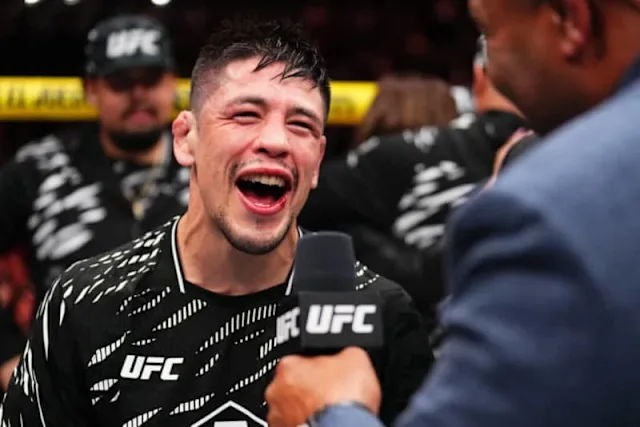
The upcoming UFC Mexico event sits at the crossroads of sport, national security, and global business strategy. While the Ultimate Fighting Championship maintains that the card is “proceeding as planned at this time,” the broader context suggests a far more delicate balancing act.
Headlined by Mexican star Brandon Moreno against Britain’s Lone’er Kavanagh, the event represents more than a fight night. It symbolizes the promotion’s deepening footprint in one of its most passionate and commercially promising markets.
🇲🇽 Brandon Moreno clearly wasn’t thrilled when asked about competing at a potential UFC White House event 😬
“Brother, tell me why I would want to be there. For what? I’m not interested. Thank you very much.”
🎥 Via @myt_guzman pic.twitter.com/N27I4JvesM
— mmamag.ma (@jamalsoussi10) February 26, 2026
A Volatile Backdrop
In the days leading up to the event, Mexican authorities intensified operations in the neighboring state of Jalisco, targeting Nemesio Rubén Oseguera Cervantes, leader of the Jalisco Nueva Generación cartel. Such developments inevitably raise concerns about the feasibility and optics of staging a major international sporting event under heightened security tension.
Journalist Rodrigo Gonzales reported that, for now, there are no official plans to relocate or cancel the event, though the situation remains under active monitoring.
The Apex Contingency
Speculation has emerged about a potential relocation to the UFC Apex in Las Vegas. Yet moving an international card on short notice is far from simple. Broadcast agreements, ticket sales, sponsorship contracts, and logistical coordination make such a shift complex and financially significant.
For UFC President Dana White, the decision is strategic. Canceling could undermine the promotion’s long-term positioning in Mexico. Proceeding, however, carries reputational risk should security conditions worsen.
Beyond the Octagon
Ultimately, UFC Mexico is more than a sporting event. It is a case study in crisis management — a test of how a global sports organization navigates uncertainty while protecting its brand, athletes, and commercial interests.
The central question is no longer simply whether the event will go ahead.
It is what message — and what cost — will accompany that decision.