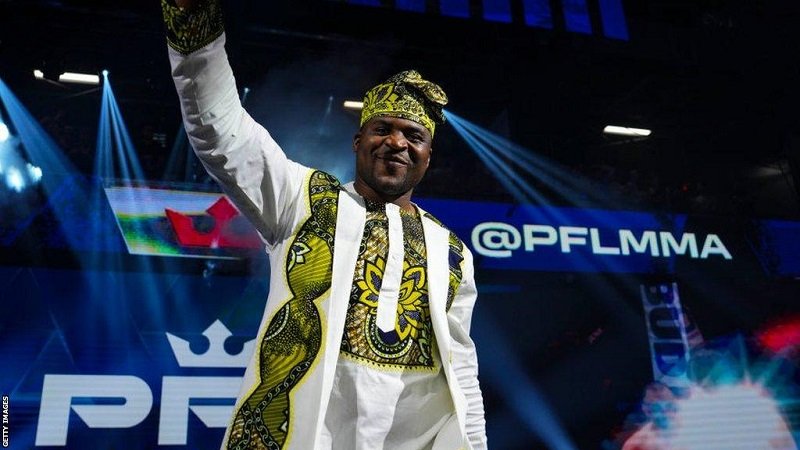
In a move that has sent shockwaves through the combat sports world, the Professional Fighters League (PFL) has officially announced the end of its partnership with Cameroonian superstar Francis Ngannou. While the organization’s statement emphasized mutual respect and wished the fighter success in his future endeavors, the announcement raises deeper questions about the real dynamics behind this unexpected separation.
When Ngannou left the Ultimate Fighting Championship in 2023, his signing with the PFL was widely viewed as a historic power move. The former UFC heavyweight champion brought not only elite athletic credibility but also immense global visibility. His presence was expected to strengthen the league’s international ambitions, particularly with the launch of the PFL Africa project.
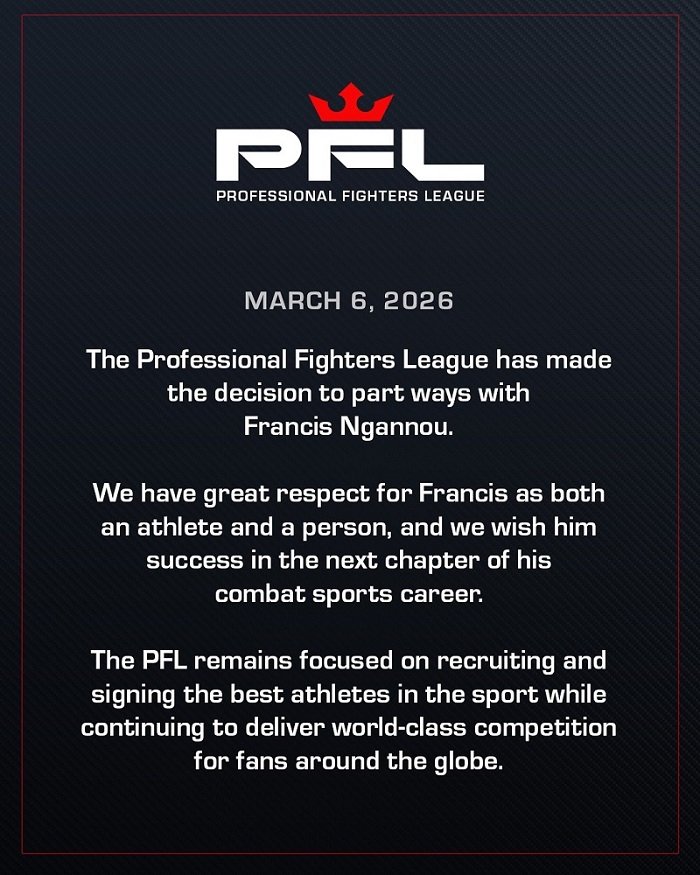
However, the sporting outcome of this partnership remains strikingly limited. Ngannou fought only once under the PFL banner. In October 2024 in Riyadh, he delivered a dominant first-round knockout victory over Brazilian heavyweight Renan Ferreira. At the time, the win seemed to mark the beginning of a new chapter. In retrospect, it became the only chapter of a collaboration that ended far sooner than anyone anticipated.
A key factor behind this unusual trajectory lies in the nature of Ngannou’s contract. His agreement with the PFL was revolutionary in MMA terms, granting him the freedom to pursue major fights outside the organization. That flexibility allowed him to enter the boxing ring against global icons such as Tyson Fury and Anthony Joshua. Those blockbuster bouts generated enormous financial rewards and media attention, ultimately overshadowing his brief tenure within the PFL cage.
From a strategic perspective, this contractual model may have exposed its own contradictions. While Ngannou’s independence elevated his status as a fighter capable of challenging traditional promotional control, it also reduced his operational value for the organization that had invested heavily in his star power. For the PFL, maintaining a global superstar who rarely competed in its events may have become increasingly difficult to justify.
Ngannou’s recent personal challenges also form part of the broader context. In 2024, he endured the devastating loss of his young son Kobe. Additionally, he faced controversy in Cameroon following a tragic motorcycle accident involving a teenage girl. These events came during a turbulent period in his career, particularly after his knockout loss to Anthony Joshua in March 2024.
Now 39 years old, Ngannou once again finds himself a free agent, with multiple options on the table. Whether he chooses to return to a major MMA organization, continue pursuing high-profile boxing bouts, or even attempt an unlikely reconciliation with the UFC, the next chapter of his career remains uncertain.
Ultimately, the larger question remains: was Ngannou’s pursuit of total contractual freedom a visionary move that redefined fighter leverage in combat sports, or an ambitious gamble that ultimately weakened his long-term institutional stability?