


From Alexandria to Rabat… how Moroccan wrestling became a “forgotten sport” questioning Morocco’s image in Africa
The participation of Morocco’s U17 national wrestling team at the African Championships held in the city of Alexandria on April 27–28, 2026, cannot be reduced to a simple sporting result. Three bronze medals and an 8th place finish only tell part of the story.
For many analysts, it is instead a warning signal revealing a deep structural weakness within one of Morocco’s oldest Olympic sports, at a time when wrestling in Africa has become a tool of sporting power, influence, and continental prestige.
While Egypt topped the medal table with 29 medals, Tunisia followed with 20, and Algeria secured 14, Morocco appeared almost on the margins of the African wrestling landscape. Yet this is neither a new nor minor discipline, but a foundational Olympic sport with a long global tradition.
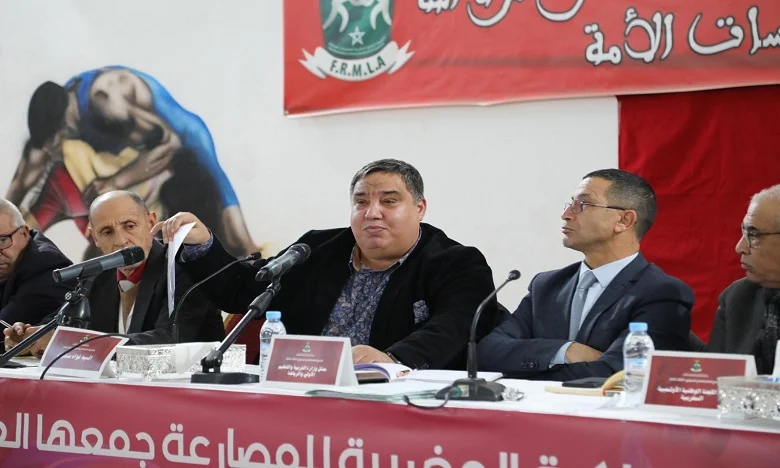
Beyond the numbers, the crisis is institutional. The governance of sports federations—particularly the Royal Moroccan Wrestling and Associated Sports Federation—is increasingly criticized for its lack of strategic vision and weak national development structure. The sport remains concentrated in a few historical cities, without a real nationwide talent development or grassroots system.
Behind the scenes, a recurring criticism emerges: a governance model where responsibilities are blurred between media visibility and administrative management, while the sport itself gradually loses competitiveness on the field.
This situation directly raises questions about the role of the Ministry of National Education, Preschool and Sports, as well as the Sports Directorate. The issue is no longer only about results, but about effective oversight of federations, transparency in public funding, and real performance evaluation.
While some emerging federations face strict compliance and recognition procedures, other long-established structures appear to operate in a protected institutional environment, despite declining sporting outcomes.
In an African context where sport has become increasingly strategic, this situation goes beyond technical performance. It directly affects Morocco’s continental image at a time when sport is a key instrument of soft power and diplomacy.
The challenge is therefore not only sporting, but structural, institutional, and symbolic: a choice between administrative routine management of federations or the construction of a genuine national performance-driven sports policy.