


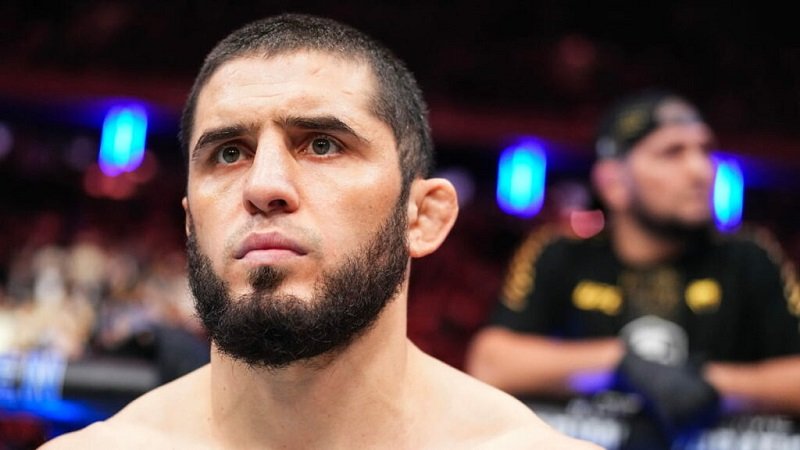
Amid an increasingly competitive landscape in the welterweight division, the perspective shared by Sean Brady goes far beyond a simple fight prediction. It reflects the deeper mechanics of Ultimate Fighting Championship, where outcomes are not only determined inside the cage, but also shaped through narratives, media positioning, and strategic influence.
By highlighting the dominance of Islam Makhachev, Brady implicitly exposes a structural imbalance among contenders. While he acknowledges that Ian Garry may deserve a title shot, he questions his actual ability to overcome the champion. This assessment is rooted in technical vulnerabilities observed in Garry’s performances against fighters like Shavkat Rakhmonov and Michael Page, reinforcing a key truth in modern MMA: once a fighter becomes “readable,” they become easier to dismantle at the elite level.
In contrast, Michael Morales emerges as a far more unpredictable and potentially disruptive force. His relative lack of exposure at the highest level transforms into a strategic asset. In a sport increasingly driven by data, film study, and pattern recognition, unpredictability becomes a weapon. Brady suggests that Morales could challenge Makhachev in critical areas like the clinch, though uncertainties remain regarding his endurance and ground defense.
Beyond the technical breakdown, this debate reflects a broader evolution in MMA as an industry. Fans are no longer passive observers; they are active participants in a marketplace of expectations fueled by fighter narratives. Statements like Brady’s contribute to shaping public opinion, influencing hype cycles, and occasionally even impacting matchmaking decisions.
Ultimately, the issue is not just about who can defeat Makhachev, but who can impose their narrative within this complex ecosystem. Between Garry’s relative predictability and Morales’ ambiguity lies a deeper battle—one that blends athletic performance with media strategy and symbolic capital.
In this layered arena, Sean Brady’s comments transcend technical analysis, becoming part of a broader struggle for narrative control in one of the most dynamic and influential sports industries today.