


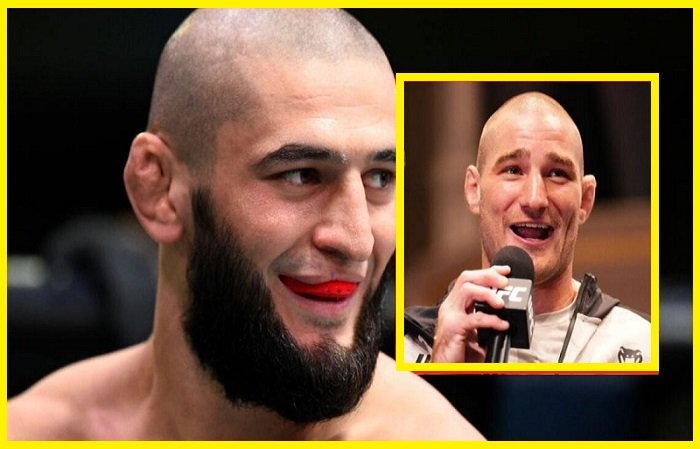
At the top of the UFC hierarchy, battles are no longer settled solely inside the Octagon. They are increasingly fought through consistency, availability, and a fighter’s ability to keep an entire division moving. This is the battlefield where Sean Strickland has launched a blunt and public attack on Khamzat Chimaev, accusing him of stalling the middleweight division through chronic inactivity.
True to his unapologetic style, Strickland’s criticism goes beyond personal rivalry. It targets what Chimaev has come to symbolize in modern MMA: a contender constantly mentioned in title conversations, yet rarely present when the division needs clarity.
Speaking to ESPN MMA, Strickland questions the logic of keeping a fighter who competes once a year at the center of the title picture. In his view, this situation effectively freezes the belt, forcing active contenders into prolonged limbo while momentum and opportunity slowly fade.
The former champion’s remarks also highlight a deeper economic truth. In today’s UFC landscape, championship belts no longer guarantee maximum financial return. Strickland openly suggests that high-profile fights — driven by narrative, controversy, or star power — can be more lucrative than title defenses themselves.
This shift exposes a growing contradiction: while belts remain symbols of supremacy, they are no longer always the engine of the sport’s business model. Within this framework, Chimaev’s inactivity becomes more than a personal issue; it turns into a structural problem that disrupts the competitive flow.
Strickland further points to Chimaev’s repeated absences due to unexplained injuries, as well as his tendency to call out fighters from other weight classes. To many observers, this creates the impression of a contender unwilling — or unable — to fully commit to one division.
Beyond the provocation lies a simple but brutal question:
can a fighter truly dominate a division he rarely steps into?